

A Tennessee death row inmate set to be the first woman to be executed by the state in more than 200 years is still alive after being administered two lethal injections, her lawyers have said.
Christa Pike, 50, convicted of murdering a schoolmate three decades ago, was due to be executed after the US Supreme Court overturned an earlier reprieve that had been ordered just an hour before her sentence was initially scheduled to be carried out in Nashville on Wednesday.
The state proceeded with the planned execution. However, Pike’s lawyers filed an emergency motion to halt and stay the execution, claiming she was still alive after both syringes of lethal injection chemicals had been administered.
Pike’s lawyers said she had “not lost consciousness, and still has a heartbeat”, adding that she was “audibly snoring”.

They said the curtains to the death chamber had “gone down twice”, and, as part of the motion, requested “immediate medical care”.
In a statement, her lawyers said they had “not been informed as to her condition”, while the Tennessee Department of Correction said she had been transported from the Riverbend Maximum Security Institution to “an off-site medical facility”.
Officials added that “every step of the state’s lawful, established execution protocol approved by the attorney general’s office” had been followed.
Reporters who witnessed the attempted execution described gasps and complaints from Pike about pain, according to Sky’s US partner network NBC News. They said she was kicking her feet so much that she knocked off the sheets laid on her.
At 7.27pm local time, moments before the first lethal injection was administered, Pike described herself as being at peace, and said: “I’m going to leave this world the way I spent most of my life, and that is in love.”
But she remained awake, and by 8.26pm, the second dose of pentobarbital had been administered.
Execution witnesses described hearing her snoring behind a closed curtain until the microphone was turned off at 8.53pm, and everyone was asked to leave.

“This is one of the worst botched executions in the modern death penalty era,” the Death Penalty Information Center (DPI) said in a statement.
“Christa Pike’s attorneys specifically warned Tennessee officials of the dangers, but they were ignored. This debacle was entirely preventable.”
The DPI – a non-profit organisation – does not take a position on the death penalty itself, but is critical of problems in its application.
Tennessee Governor Bill Lee said he had ordered “a comprehensive, third-party review to determine exactly what occurred”, and suspended all remaining scheduled executions this year.
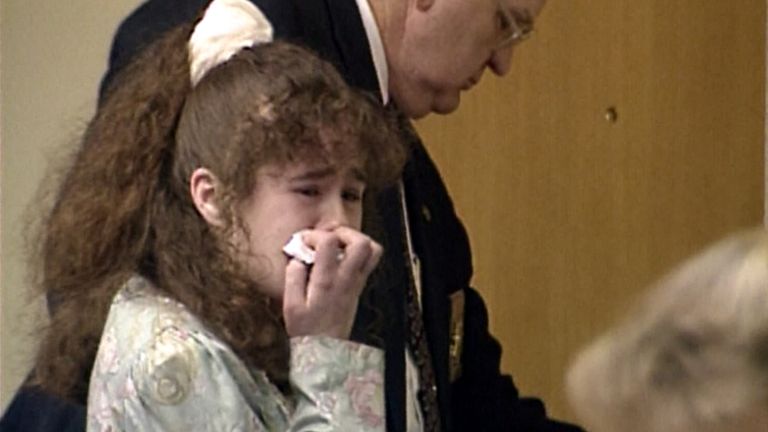
Victim’s mother outraged
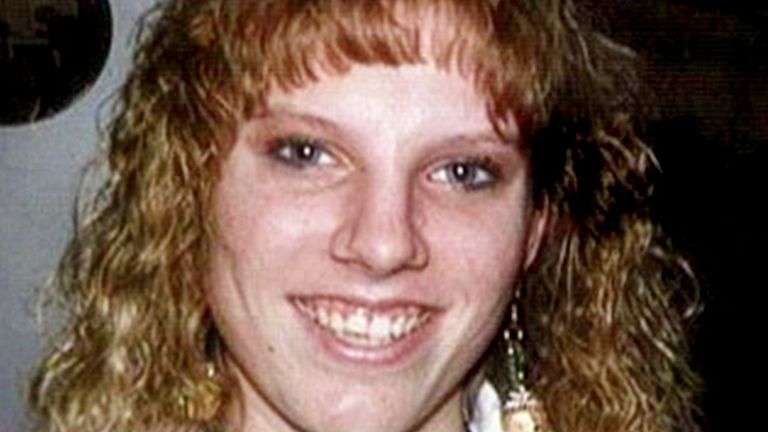
Pike and her boyfriend, Tadaryl Shipp, were convicted of torturing and killing Colleen Slemmer, a 19-year-old classmate of theirs, at a job training facility in the city of Knoxville in 1995.
Prosecutors said Pike feared she was trying to steal her boyfriend, and lured her to a wooded area.
A pentagram, a star-shaped symbol associated with Satanism, was carved on the victim’s body, which, along with other elements of the crime, stoked fears of Satan worship during the so-called “satanic panic” in the country during the 1980s and 1990s.
Shipp, who was 17 when the crime was committed, received a life sentence with the possibility of parole.
Pike does not deny the killing, but her supporters have argued the state should consider her age at the time, mental illness and a history of severe sexual abuse.
May Martinez, who had travelled to Nashville to witness the execution of her daughter’s killer, described the attempt as “a mess” in a phone interview with NBC News on Thursday morning.
“They went to try to execute her, and she didn’t die,” she said.
She said Pike never expressed remorse during the attempted execution.
“Not nothing… about what happened, you know, to Colleen,” she said.
She criticised the communication about what was going on from officials.
“We didn’t know anything until we got up to the office and saw the commissioner,” she said. “And he said that it didn’t work, that it didn’t work, and she’s on her way to the hospital.”
Asked what her message to the governor and attorney general was, she replied: “They f***** up.”
‘Singular and unparalleled’
On Wednesday, a federal appeals court halted Pike’s initial execution after ordering a review of whether her allegations of childhood sexual abuse and rape were fully considered when she was sentenced to death by a judge in 1996.
The US Supreme Court had earlier this week rejected a bid by Pike’s lawyers to halt her execution, after Mr Lee had denied her petition for clemency.
Pike is the only woman on death row in Tennessee. The last execution of a woman in the southern state was in 1820, historical records show.
Seven other people have survived medical problems due to the execution team’s failure to access a vein to administer lethal injection drugs, but no one has stayed alive after receiving the drugs used in such executions, according to Robin Maher, executive director of the DPI.
Ms Maher said what Pike experienced was “singular and unparalleled”.
It is the second failed execution in Tennessee this year.
In May, the execution of Tony Carruthers, convicted of killing three people in 1994, was called off after officials could not find a suitable vein for his lethal injection.
Last October, the lawyer of convicted child killer Byron Black claimed that he showed signs of “sustained cardiac activity” two minutes after he was pronounced dead following his execution in the state.
Concerns had been raised that Black was being put to death with a working defibrillator implanted in his chest.
Source:  news.sky.com



Be the first to comment