
A Massachusetts judge has declared a mistrial in the murder case against Lindsay Clancy after jurors conceded they would not be able to unanimously decide whether she should be held criminally liable for killing her three young children after a week of deliberating.
The case against Clancy has both captivated and heavily divided the American public, even spurring remarks from the US president.
There was a sense of disbelief in the courtroom as the case – and Clancy’s future – were left in limbo.
Clancy’s lawyer led a dramatic last-ditch attempt to halt the mistrial and force a verdict, which was unsuccessful. A hearing later this month could establish what happens next in the case.
“At this point, I’m going to declare that the jury is deadlocked and I’m going to declare a mistrial,” Judge William Sullivan told the jury on Friday, dismissing them after weeks of testimony, seven days mulling Clancy’s fate and the panel signalling three times that they were deadlocked.
The deadlock – known as a hung jury – does not mean prosecutors have proven their case, nor does it mean the defendant is not guilty.
A hearing is scheduled for 29 September, in which prosecutors could outline their next steps in the case.
Meanwhile, the 36-year-old former nurse will remain held on the same murder charges and continue to stay in the Tewksbury Hospital, a state psychiatric mental health facility in Massachusetts in which she is currently housed.
Prosecutors could decide from a host of options as to what happens next, including holding another trial or coming to a plea agreement with Clancy over the strangulation of her children – five-year-old Cora, Dawson, three, and eight-month-old Callan – in their Massachusetts home.
After killing the children, Clancy cut herself with a knife and jumped from a second-story window in an attempt to take her own life, which left her paralysed.
Clancy does not deny killing the children in 2023 but pleaded not guilty to the three first-degree murder charges, with her lawyers arguing she was suffering from postpartum psychosis and so should not be held criminally responsible.

The grim case led to a series of dramatic twists and turns as the jury deliberated Clancy’s fate.
On Friday, a court session began with Clancy’s attorney Kevin Reddington pushing for a juror on the panel to be removed, after the jury indicated a day prior in a note that a member of the panel had not been following instructions on reasonable doubt.
Under US law, a jury must unanimously believe “beyond a reasonable doubt” that someone is guilty to convict them of a crime.
The designation is the strictest standard in the US legal system. It places the burden on the government to prove that the accused is guilty, instead of the accused to prove their innocence.
The judge denied the request and sent jurors back to deliberate. About an hour later, the panel came back to say they still could not reach a verdict.
It was then that Sullivan said he had no choice but to declare a mistrial. Reddington immediately pleaded for a temporary pause so they could file an emergency appeal with the Massachusetts Supreme Judicial Court.
In the filing, Reddington asked the state’s highest court to order the judge to force the jury to continue deliberating and for the judge to question the panel over the alleged holdout juror that led to the deadlock.
The state’s high court denied the request, paving the way for the mistrial.
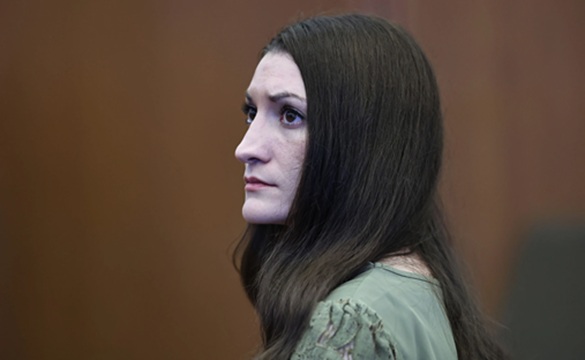
Clancy appeared downcast as the judge made the ruling official. It was surprisingly quiet in courtroom.
She remained expressionless but her lawyer looked visibly upset by the decision. He continued to push back, insisting the judge had the power to dismiss the one holdout juror.
“Unfortunately, they’re not holding out based on a good-faith issue,” he said.
Reddington said he intended to file another motion essentially requesting that the mistrial be reconsidered. This could come up at the next hearing later this month.
“There will be no decisions made today,” Plymouth County District Attorney Timothy Cruz said on Friday concerning what could happen next in the case.
He said he would meet the rest of their legal team to decide whether they would pursue a new trial.
“The facts are Lindsay Clancy killed her three children and the evidence suggested to us that she was in control of her actions when she committed those homicides,” Cruz said.
Outside the court on Friday, Reddington said he believed 11 of the 12 jurors would have delivered a verdict that favoured Clancy had it not been for the one holdout.
But it remains unclear what position any member of the jury took or what occurred in the deliberation room.
For weeks, the case gripped the country and sparked debate over the topic of postpartum psychosis. Many followed along with livestreams of the trial, as family members and experts testified. Each day, more than 200 members of the media crowded the court and groups of supporters in varying sizes often gathered outside.
The widespread attention even spurred comments on Friday from US President Donald Trump, who called the case a “horrible tragedy”.
“She did a horrible, horrible thing. Can’t be worse,” he said. “I assume there’s going to be another trial.”
Trump added: “But you’ll find out what the price to pay is. There’ll be a price.”
What is a mistrial?
Under US law, the jury must unanimously reach a conclusion “beyond a reasonable doubt”. If they cannot, the judge can call a mistrial, which ends the trial without a verdict.
Jurors in Clancy’s trial had been deadlocked for days and told the judge three times that they were unable to reach a unanimous decision.
Massachusetts Superior Court Judge William Sullivan, who was overseeing the trial, previously urged them to continue deliberating until there was no possiblity of a decision.
In a last-ditch effort he issued additional instructions, known as a Tuey-Rodriguez charge in the state, encouraging the panel to consider all perspectives, and ensuring jurors were questioning and examining their own views in the case.
The jury continued to indicate they could not come to a consensus, leading the judge to say on Friday that he had no choice but to declare a mistrial.
This does not mean prosecutors have proven their case, nor does it mean the defendant is not guilty.
Now, the prosecution could push forward with their criminal charges and restart the trial with a new jury or negotiate a plea agreement.
Alternatively, prosecutors could dismiss the charges altogether.
Will prosecutors ask for a new trial?
In serious felony cases like these, prosecutors often ask for a retrial.
If they do, the jury selection process will take place once again and a new trial will be scheduled with a new set of jurors.
The time it could take to schedule another trial will depend on a host of factors, including the court schedule, any legal requests either side may file and how long it may take to line up expert witnesses.
The six-week trial in Massachusetts captured significant public interest across the globe, with crowds gathering outside the court.
“A case like this that obviously has been so high-profile and there is so much of an emotional response to this to the facts of this case, I think it’s very likely that the prosecutor will ask for a retrial,” Cucolo said.

Why was the jury deadlocked?
That is unclear, but it has been a complex case with each side presenting a huge amount of expert testimony.
In a note to the judge the panel indicated that one juror was not following guidance on reasonable doubt.
Under US law, a jury must unanimously believe “beyond a reasonable doubt” that someone is guilty to convict them of a crime.
The designation is the strictest standard in the US legal system. It places the burden on the government to prove that the accused is guilty, instead of the accused to prove their innocence.
Clancy’s lawyer indicated that sole juror was holding up the proceedings and causing the deadlock. He asked the judge to remove the juror.
But the judge denied his request and officially declared a mistrial the following day.
The identities of the nine women and three men on the jury has not been made public and the judge banned any photographing or filming of them to retain their anonymity.
But once a case is over, a juror can choose whether or not to speak publicly about the case and their deliberations.
Following other high-profile trials, jurors have in some instances come forward to discuss the case, even writing books or doing media interviews.
So while it remains unclear what has gone on behind closed doors, more could be revealed in the coming days or weeks.
If you are suffering distress or despair and need support, you could speak to a health professional, or an organisation that offers support. Details of help available in many countries can be found at Befrienders Worldwide www.befrienders.org.
A list of UK organisations that can help is available here.
Source: bbc.co.uk




Be the first to comment