
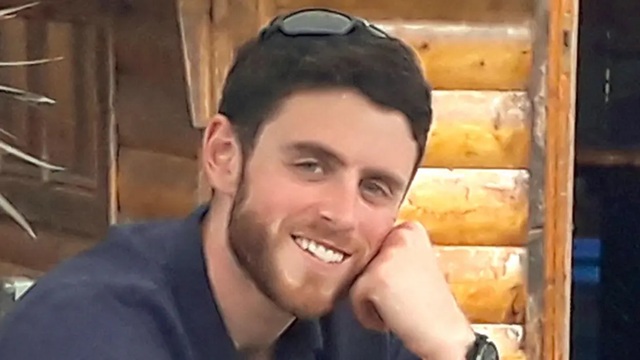
Prime Minister Andy Burnham has told the BBC that PC Andrew Harper’s killers will remain behind bars as he announced changes to the early release scheme aimed at easing prison overcrowding.
In an exclusive interview with BBC Breakfast, Burnham said anyone convicted of unlawful killing, including all forms of manslaughter, will be excluded from the scheme, which would have made two of the officer’s killers eligible for early release.
Burnham said extra prison space would be created by deporting foreign prisoners and releasing some inmates serving indefinite sentences.
It follows months of campaigning from PC Harper’s family and former colleagues to block the release of his killers.
The 28-year-old was responding to a burglary in Berkshire in 2019 when he was dragged along a road by a vehicle as three teenagers fled the scene of a quad bike theft.
When it emerged that two of the killers, Jessie Cole and Albert Bowers, could be released early, there were passionate calls for the government to intervene and block those convicted of manslaughter from early release.
“I heard obviously what Andrew Harper’s family were saying, I mean who couldn’t? Nobody would want a position to arise where those guilty of killing a police officer are let out early from prison,” Burnham told the BBC.
He conceded the announcement will mean “hundreds” more people stay in prison, meaning additional space will need to be found in a system that is more than 97% full in England and Wales.
Harper’s force, Thames Valley Police, said the prime minister’s decision would be “welcomed by many across policing and our communities”.
Chief Constable Jason Hogg said in a statement he hoped the announcement would bring reassurance to Harper’s family, as well as to other victims and bereaved families “who continue to seek confidence that the most serious offences are treated with the gravity they deserve”.
“Today is not about politics,” he said. “It is about remembering Andrew, recognising the profound impact his death continues to have on those who knew him, the communities he protected and those who serve in policing today.”
Speaking to BBC Breakfast, Thames Valley Police and Crime Commissioner Matthew Barber said he was “pleased” Harper’s killers would not now be released but added it was a “bittersweet victory”.
The Conservative politician also warned there had not been an “appropriate level of resources” provided to the probation service and the police to keep the public safe from people being released under the scheme.
The prime minister said finding extra space would be achieved in part through ending Imprisonment for Public Protection sentences, or IPPs.
These were available between 2005 and 2012, and were given to offenders who pose a significant risk of causing serious harm to the public.
Once a minimum term has been served, the prisoner can be released only once the Parole Board is satisfied they no longer need to be confined for public safety, meaning many are being held indefinitely.
Burnham said he had applied “common sense” on the treatment of IPPs, which he had “long-standing concerns” about.
“I was faced with a situation where people on those sentences who have more than served their time, not being released when others who’ve committed very serious crimes being released early,” he told the BBC.
“The judgement I’ve made is the public, in my view, would prefer a situation where people who have served their time to be considered for release before those who haven’t.”
According to Ministry of Justice data, 2,271 people are serving IPP sentences as of June. Of those, 856 have never been released because the Parole Board thought it was not safe to do so.
Burnham conceded that of those offenders, there will be “individuals who will pose a risk to communities”, and said a cross-party oversight group would be established.
The government will table legislation to terminate the sentences by the “end of this Parliament”, he added.
Pressed on how many foreign prisoners could be returned, Burnham said it was “hundreds”.
The government has said powers will be implemented early next year to deport some foreign criminals immediately after sentencing.
Those powers would block foreign prisoners from ever returning to the country while “keeping those in prison for the most serious crimes locked up for a substantial period before they are removed”.
The government is not thought to have signed any additional prisoner returns agreements with other countries.
It is understood that work has also begun to create more cells in existing prisons by adapting space used for other purposes, but that is also expected to take months.
None of the measures announced by Burnham are likely to create much additional prison capacity by the time the first batch of prisoners are released early in October.
The prime minister is said to have taken a “political decision” to use some of the remaining capacity in the prison system to ensure the changes announced today could be implemented immediately.
In addition to those in jail for manslaughter, the prime minister said prisoners convicted of indecent assault offences and death by dangerous driving will also remain in prison.
Historic child sex offences and causing or allowing the death of a child will also be exempted from the early release scheme, while new “restriction zones” to better protect domestic violence survivors from perpetrators released early will be introduced.
Burnham said the additional changes announced on Sunday would result in “hundreds” more prisoners staying behind bars.
The justice secretary is expected to give a more precise figure for how many people will be affected when he gives a statement in Parliament on Tuesday.
Earlier this month, Burnham announced prisoners guilty of rape, serious child sex offences and grooming will be excluded from early release eligibility.

The Sentencing Act 2026 was designed to address the prisons overcrowding crisis, by releasing large numbers of inmates earlier than had been previously planned. The early release scheme is scheduled to start on 1 October.
But it was met with fierce opposition from some, including family and former colleagues of PC Harper.
Cole and Bowers were sentenced to 13 years for manslaughter in 2020 and would previously have become eligible for release under the scheme after serving half of their sentences, down from two-thirds.
The driver of the getaway car, Henry Long, was given an “extended” sentence of 16 years for manslaughter and was therefore not eligible for release.
PC Harper’s widow, Lissie Harper, had described the prospect of their sentences being reduced as “deplorable”.
His mother Debbie Adlam told BBC Breakfast earlier this month she was in “turmoil” following conflicting reports about whether the killers would be released, describing the handling of the situation as a “hash”.
Conservative shadow home secretary Chris Philp previously accused Burnham and Labour of “re-traumatising victims and their families with their constant U-turns”.
During his early days as prime minister, Burnham announced the changes brought in by the Sentencing Act would be paused while a review was carried out.
On 3 August, the government announced prisoners guilty of rape, serious child sex offences and grooming would be excluded from the new policy.
Prisoners serving sentences for murder would not be eligible for early release.
While Downing Street initially warned it would not be possible to exclude “one or two offenders” convicted of manslaughter, Burnham later said he was “confident” of being able to block PC Harper’s killers from the scheme.
It marked a shift from a week earlier, when he said there was “nothing more” he could do without risking the collapse of the prison system.
The Sentencing Act made a number of key changes designed to mean fewer people were sent to prison, and to free many inmates earlier than planned.
The prison population in England and Wales on 24 August was 86,843, which is 97.6% of the total capacity.
Source: bbc.co.uk



Be the first to comment